
Insights
Insights, lessons learned, and best practices regarding digital products, strategic UX, and AI applied to innovation, drawn from real-world experience on complex projects.

Designing for sensitive data: UX when not everything can be visible
Read more
Data spaces are not repositories: they are rules of the game
Read more
EUDI Wallet: from innovation to a trusted European infrastructure
Read more
Blockchain as a trust layer, not as the product's main feature
Read more
Verifiable credentials: the challenge isn't issuing them, it's making them useful
Read more
Not Everything Needs a Chatbot: How to Choose the Right Type of AI for a Product
Read more
Before building, you need to turn uncertainty into a product direction
Read moreIdeas applied in real-world projects
A selection of projects in which these insights are translated into discovery, functional definition, strategic UX, and delivery in the contexts of innovation, applied AI, digital identity, and traceability.

Clinical telemonitoring solution
::sub::Monitorización remota de pacientes con IA predictiva y seguimiento clínico digital::/sub::
::desc::Plataforma healthtech orientada a monitorización remota de pacientes con insuficiencia cardíaca mediante wearables, dashboards clínicos y modelos predictivos basados en IA. Participé en el diseño de una UX estratégica, definición funcional, diseño end-to-end y soporte a delivery en un entorno clínico multi-hospital y altamente complejo.::/desc::
::tags::HealthTech · IA · UX Strategy · Delivery::/tags::
Clinical telemonitoring solution
Remote monitoring of patients with heart failure using predictive AI and digital clinical follow-up
This was a European innovation project initiated by the public sector to develop and validate advanced technological solutions in a real-world clinical setting. Its aim was to improve the quality of life of patients with chronic heart failure through remote monitoring, continuous clinical follow-up and predictive models based on artificial intelligence. The initiative was carried out within the framework of an international consortium and enabled the solution to be tested in three hospital pilot schemes, bringing prevention, clinical support and data-driven decision-making closer to clinical practice.
HealthTech · Predictive AI · Strategic UX · Digital Product · Delivery · European R&D
The problem
The challenge was to transform care for older adults into a seamless, coordinated, and remote experience, without adding complexity for those who need clarity the most.
A project where the key was not just to create a platform, but to design a solution capable of improving the monitoring of people with chronic conditions, facilitating care coordination, and reducing friction for users with limited digital literacy. The challenge was to integrate the technology into real-world health and care processes without adding further complexity.
Ongoing monitoring of vulnerable patients
Older adults and those requiring ongoing care need support that goes beyond occasional check-ins. The challenge was to provide more consistent, proactive monitoring that is attuned to the patient’s daily reality, enabling the detection of significant changes without relying solely on in-person visits or isolated contacts.
Coordination between healthcare, caregiving & tech
The context required coordinating clinical, operational, and technological needs among the consortium, several companies, and three pilot hospitals. Beyond simply designing a tool, the solution had to facilitate collaboration among healthcare, technical, and management teams, helping to organize information and maintain clarity in an already fragmented healthcare environment.
Usability for users with limited digital literacy
One of the main challenges was to design an accessible, clear, and user-friendly experience for older adults and caregivers, without compromising its usefulness for professionals. The interface had to reduce friction, simplify tasks, and inspire confidence, while taking into account real barriers related to age, context, comprehension, and technological familiarity.
The solution
Patient App
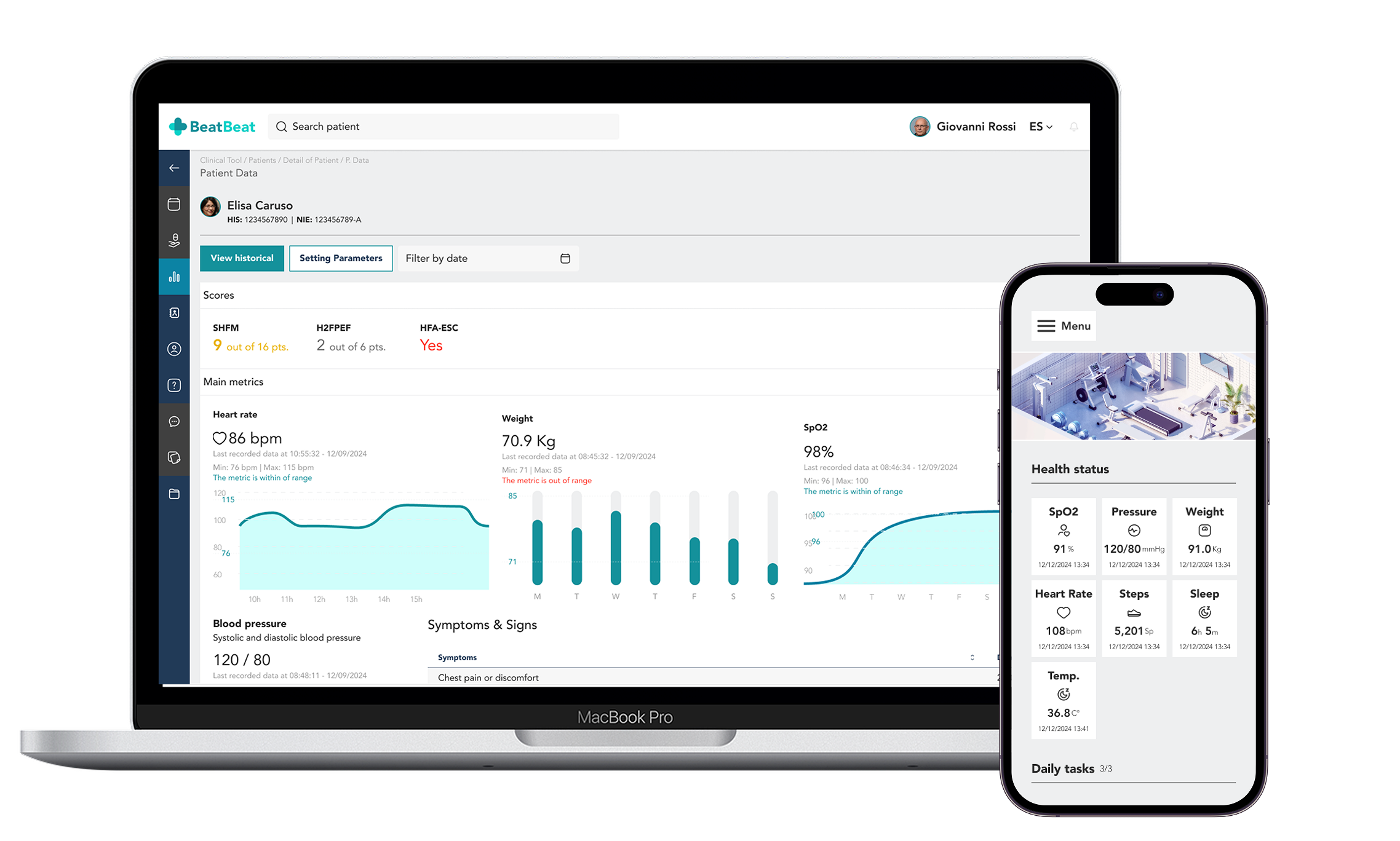
A mobile app that allows patients to record relevant information about their health, view daily tasks, and maintain a more consistent connection with the clinical team. The user experience is streamlined to make it accessible, automatically collecting data through a connection with IoT monitoring devices.
Clinical Tool
A web-based tool for clinical staff that collects and processes patient information. This app allows users to track a patient’s progress and detect early signs of deterioration. The focus was on providing a quick overview of the patient’s clinical status and supporting care decisions in a real-world work environment.
Clinical Dashboards
Dashboards designed for case managers that provide an aggregated view of key indicators, trends, and patterns, helping to interpret the information generated by the system. Their purpose is to transform clinical data into actionable insights for monitoring, analyzing, and continuously improving care.
Predictive analytics models
The solution incorporated artificial intelligence models designed to detect anomalies in a patient’s condition at an early stage. Using data from the patient app, the system analyzed individual patterns of physiological behavior to identify significant deviations from each patient’s baseline. The goal is to support more preventive care by facilitating the detection of sudden or sustained changes that could signal a potential clinical risk.
The Major Challenge of Adherence
One of the key aspects of this project has been ensuring that the solution integrates naturally into the patient’s daily routine, without causing resistance, abandonment, or a feeling of being overwhelmed. To achieve this, the design must be clear, intuitive, and useful from the very first use, especially for users with less technological familiarity. The challenge has been to simplify the interaction without losing clinical value, ensuring that remote monitoring is perceived as real support rather than an additional task that is difficult to maintain.
Digital Identity in the Healthcare Sector
The solution also explores the use of self-sovereign digital identity in the healthcare setting, investigating how verifiable credentials could facilitate more secure, traceable, and controlled access to relevant patient clinical information. In such a sensitive context, it is essential to analyze cryptographic mechanisms that strengthen trust among authorized entities, protect privacy, and enable healthcare portability and interoperability.
Remote telemonitoring
The system allows for the collection and review of patient information outside the hospital setting, enabling more continuous monitoring that is better integrated into the patient’s daily life. This remote monitoring helps reduce reliance on one-off check-ins, provides a more comprehensive view of the patient’s progress, and makes it easier for the clinical team to detect significant changes within a broader context before they escalate into more complex situations.
My role
Functional definition, strategic UX, and delivery in a complex clinical setting
My role evolved from UX/UI and functional definition to functional support and coordination during the final stages of delivery. I worked on the functional implementation of the solution, workflow definition, end-to-end UX, wireframes, UI design, clinical journeys, dashboards, and the functional backlog, as well as workshops, functional validation, QA, development support, and clinical demos. Although I inherited an initial discovery phase, during the process it was necessary to redefine much of the functional logic to adapt it to real clinical needs and different hospital contexts. I also participated in end-to-end validation with hospitals, support during pilot phases, functional review of implementation, and final project coordination following several internal changes within the team.
Results
The project validated a functional remote monitoring solution with real patients, combining operational clinical dashboards, wearable integration, predictive alerts, and digital care workflows designed for continuous monitoring and early detection. The platform was piloted in various European hospital settings and successfully demonstrated the feasibility of applying predictive AI in healthcare within real clinical processes, while also incorporating a shared patient journey and international clinical validation. The project subsequently progressed toward CE marking and yielded key insights regarding adherence, assisted onboarding, continuity of use, data quality, and the sustainability of digital experiences for vulnerable patients.
Learning
This was one of the projects where I gained the deepest insight into healthtech, complex products, clinical UX, design for vulnerable patients, AI-driven systems and multidisciplinary coordination within European innovation environments. As well as being involved in the functional definition and delivery of a highly complex solution, the project gave me a first-hand understanding of how the quality of the user experience directly influences the clinical and technological value of the product. Above all, it taught me that AI only delivers real value when the experience, processes and data quality are sufficiently well designed to sustain it over time.
Proyecto anterior Proyecto siguienteLet's tackle a complex challenge
We can discuss products, UX, digital health, applied AI, or complex solutions that need to evolve from an idea into a clear, actionable plan focused on real-world application.
ContactMacarena Torralba
Product Innovacion · UX Strategy · IA & Emerging Tech
Defining and bringing to market complex digital products at the intersection of experience, technology, and innovation.

SSI Ecosystem
::sub::Ecosistema SSI para identidad digital, interoperabilidad y credenciales verificables::/sub::
::desc::Producto de identidad digital descentralizada orientado a emisión, gestión y verificación de credenciales verificables para ciudadanos y organizaciones. He participado en la evolución funcional y UX del producto durante distintas fases de crecimiento, interoperabilidad y adaptación enterprise.::/desc::
::tags::SSI · Interoperabilidad · Producto · Blockchain::/tags::
SSI Ecosystem
A digital identity and verifiable credentials management solution adaptable to multiple business sectors
A verifiable digital trust enterprise platform designed to issue, manage, and verify electronic credentials and attestations among organizations, citizens, customers, and systems. The solution prepares companies and institutions for the exchange of verifiable data within the framework of eIDAS2, making it a solution aligned with EUDIW. It combines digital wallets, cryptographic verification, and integration with existing systems. My involvement has focused on the product’s functional and UX evolution, helping to transform a complex technical ecosystem into clearer, scalable workflows tailored to enterprise and institutional scenarios.
Self-Sovereign Identity · Web3 · Verifiable Credentials · Strategic UX · Digital Product
The problem
The challenge of transforming a complex ecosystem of digital identity, verifiable credentials, and European regulations into a clear and straightforward experience for businesses, institutions, and users.
The product addresses a context in which organizations, citizens, and systems need to exchange verifiable data with greater security and interoperability. The challenge lies in translating technical and regulatory concepts—such as eIDAS2, EUDIW, OIDC, and Web3—into product workflows that are understandable, scalable, and ready for real-world enterprise use cases.
A technical field that is difficult to master
Decentralized digital identity combines standards, wallets, verifiable credentials, trust models, and cryptographic verification. The challenge was to transform that technical complexity into a clear product experience, where every user could understand what they are issuing, verifying, or sharing.
Interoperability among stakeholders and systems
The solution needed to connect organizations, citizens, wallets, issuing entities, verifiers, and external systems within a single trusted ecosystem. This required organizing data flows, roles, and permissions to facilitate the exchange of verifiable data without disrupting the user experience or increasing operational friction.
Adaptation to enterprise and regulated environments
The product needed to evolve to address more demanding use cases, meeting the specific needs of businesses and institutions: control, traceability, security, scalability, and regulatory compliance. The challenge was to make the platform robust enough for regulated environments, yet user-friendly for users who were not necessarily technical experts.
The solution
Personal wallet
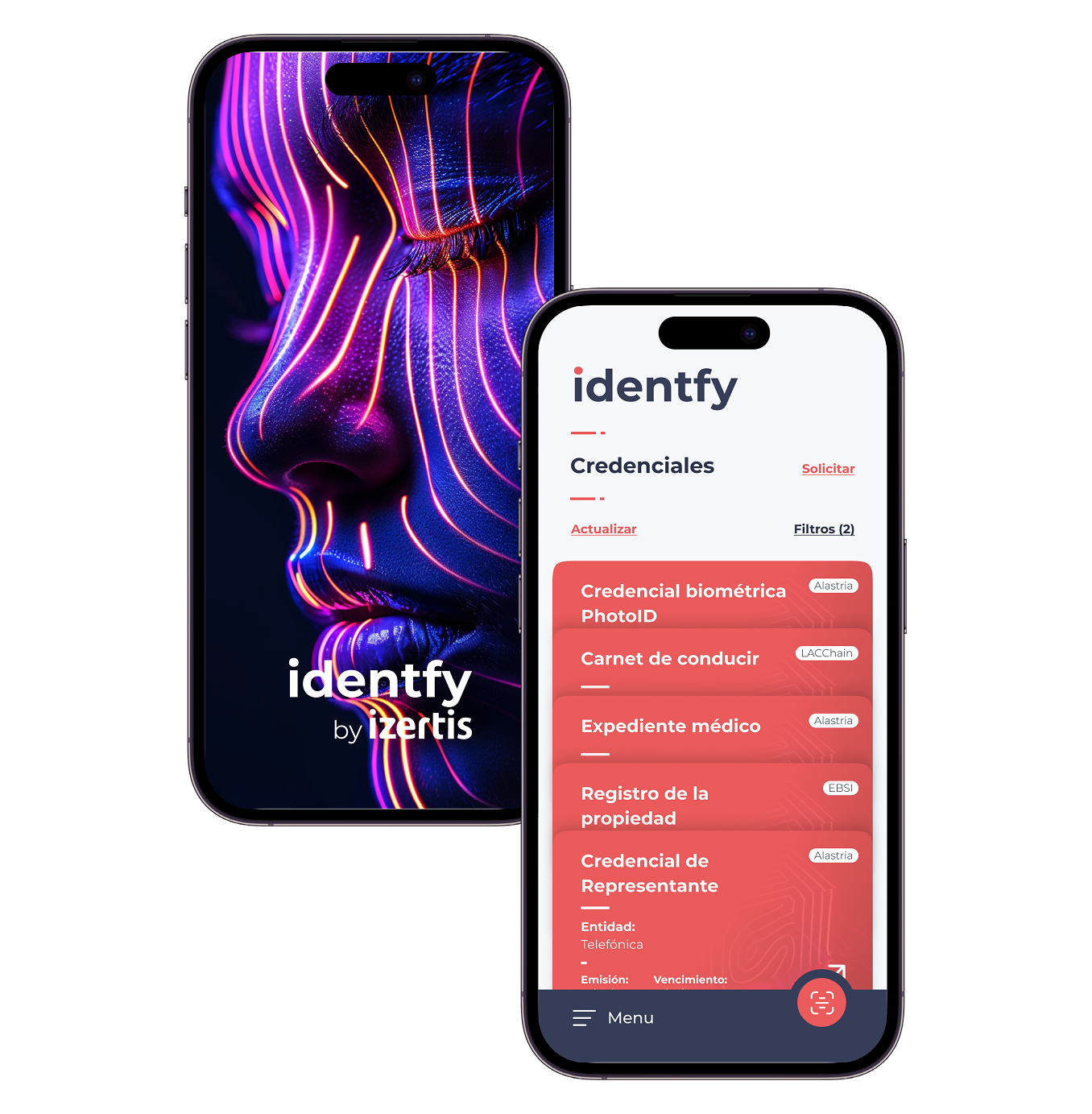
A mobile app designed for citizens who need to securely receive, store, and submit electronic documents. Its goal is to give individuals control over their data, allowing them to decide who can access their personal information and when to share it.
Business wallet
A web application designed for ermite. It enables the management of a legal entity’s digital identity, as well as the credentials associated with it. It facilitates scenarios in which an entity needs to identify itself, verify attributes, receive or submit verifiable information, and participate in trust ecosystems with other organizations, customers, or government agencies.
Wallet connector
A user-friendly web service that acts as an interface layer between client systems, wallets, and the SSI layer. It enables the solution to be integrated into existing business processes, making it easier for companies and institutions to adopt digital identity in a more scalable, interoperable, and actionable way.
Management of credentials and SSI
The solution enables the issuance, management, presentation and verification of verifiable credentials linked to individuals, organisations or processes. Through modules and wallets, the product facilitates the management of accredited digital attributes, enabling citizens, businesses and issuing entities to operate using reliable information. The aim is to organise digital identity into clear, secure and reusable workflows, reducing reliance on static documents or manual validation.
Interoperability You Can Trust
The solution is designed for scenarios where different standards, wallets, stakeholders and trust models coexist. It aims to facilitate interoperability between ecosystems, enabling credentials to be issued, shared and verified in contexts aligned with eIDAS2 and the EUDI Wallet. The challenge is to translate this regulatory and technical complexity into product workflows that are understandable, scalable and ready for use across multiple stakeholders.
Secure and traceable verification
The platform incorporates verification mechanisms that allow for the authentication, integrity, and validity of submitted credentials to be verified. This enables organizations to rely on the information received without having to depend solely on manual processes, isolated documents, or additional intermediaries. The goal is to strengthen trust among parties, improve the traceability of transactions, and reduce risks associated with fraud, manipulation, or a lack of verifiable evidence.
UX for Non-Technical Users
One of the main challenges is to translate a highly technical field into an experience that is understandable to business, management, and operations professionals. The solution must make concepts such as verifiable credentials, wallets, issuers, verifiers, and trust frameworks more accessible, without compromising on functional rigor or security. The focus is on designing guided workflows, clear screens, and intuitive actions that enable the adoption of verifiable digital identity in real-world enterprise contexts.
My role
Functional definition, product development, and strategic UX
My role focused on the functional and UX evolution of the ecosystem across different stages of the product’s maturity. I worked on defining workflows, user journeys, key screens, and experience improvements to facilitate complex use cases related to the issuance, management, presentation, and verification of verifiable credentials. The main challenge was to translate a technical ecosystem—SSI, digital wallets, organizational identity, interoperability, and trust frameworks—into a clearer, more structured, and understandable experience for enterprise, institutional, and non-technical users.
Results
The work improved the clarity of the product, streamlined complex workflows and made critical processes within the digital identity ecosystem easier to understand. The functional and UX enhancements helped adapt the solution to more complex scenarios, incorporating new requirements relating to interoperability, credential management, Business Wallet, Personal Wallet and integration with external systems. This helped to consolidate a more consistent and scalable experience, better able to address enterprise, institutional and regulated use cases, where trust, traceability and ease of adoption are key to ensuring the solution can be applied in real-world contexts.
Learning
The project allowed me to explore in depth how to transform emerging technologies such as SSI into digital products that are usable, actionable and understandable for different user profiles. One of the key lessons I learnt was the importance of balancing technical rigour, regulatory compliance and user experience clarity, particularly when the end user is not necessarily expected to understand concepts such as verifiable credentials, digital wallets or interoperability between trust frameworks. The project strengthened my ability to bridge business, UX and technology in products where trust, security, scalability and adoption are just as important as the platform’s core functionality.
Proyecto anterior Proyecto siguienteLet’s turn digital trust into experience
We can discuss products, UX, digital identity, SSI, or enterprise solutions that need to transition from a complex technical ecosystem to a clear, scalable approach focused on real-world adoption.
ContactMacarena Torralba
Product Innovacion · UX Strategy · IA & Emerging Tech
Defining and bringing to market complex digital products at the intersection of experience, technology, and innovation.

Traceability Service
::sub::Plataforma de trazabilidad industrial para el sector vitivinícola::/sub::
::desc::Sistema de trazabilidad end-to-end para bodegas basado en integración de datos, blockchain y reconocimiento visual mediante IA. Coordiné delivery, aterrizaje funcional y definición de workflows en un entorno industrial con múltiples integraciones y fuentes heterogéneas.::/desc::
::tags::Trazabilidad · Integración · IA · AgroTech::/tags::
Traceability Service
End-to-end traceability service for the wine industry based on blockchain and artificial intelligence
An innovation project aimed at improving the traceability of agri-food processes in the wine sector by connecting information from different sources, systems, and stages of the value chain. The solution combines data integration, blockchain-based tokenization, and the use of computer vision for recognizing physical product labels. My role focuses on coordinating implementation, ensuring functional deployment, and defining workflows, helping to organize complex processes involving multiple integrations, stakeholders, and heterogeneous information sources.
Industrial Traceability · AgroTech · Blockchain · Tokenization · Visual AI · Delivery
The problem
The challenge of digitizing a fragmented value chain, transforming it into a clear, immutable traceability system that is integrated with the day-to-day operations of wineries.
The project is based on an environment where information on production, processing, and product tracking is scattered across various processes, systems, and disparate data sources. The challenge lies in linking this data in a coherent manner, ensuring its reliability, and turning traceability into a useful tool for operations, quality control, and decision-making.
Processes involving scattered information
Wine traceability involves multiple stages, stakeholders, and data points throughout the value chain. The challenge lies in organizing this information—which comes from production processes, internal systems, and external sources—to build a more comprehensive, reliable, and accessible view of the product’s journey.
Evidence that is difficult to verify
In an industrial setting, simply recording data is not enough; it is also necessary to be able to trust its source, integrity, and evolution. The solution must facilitate the recording of verifiable evidence, reducing reliance on manual checks or isolated information and providing greater confidence in what happens at each stage of the process.
Operational and technological complexity
Data is not generated at a single point, but rather at different times, using different tools and processes. The challenge lies in connecting this operational reality with a system capable of organizing the data, interpreting the evidence, and providing a reliable view of the product’s journey without relying on isolated records.
The solution
App for consumers
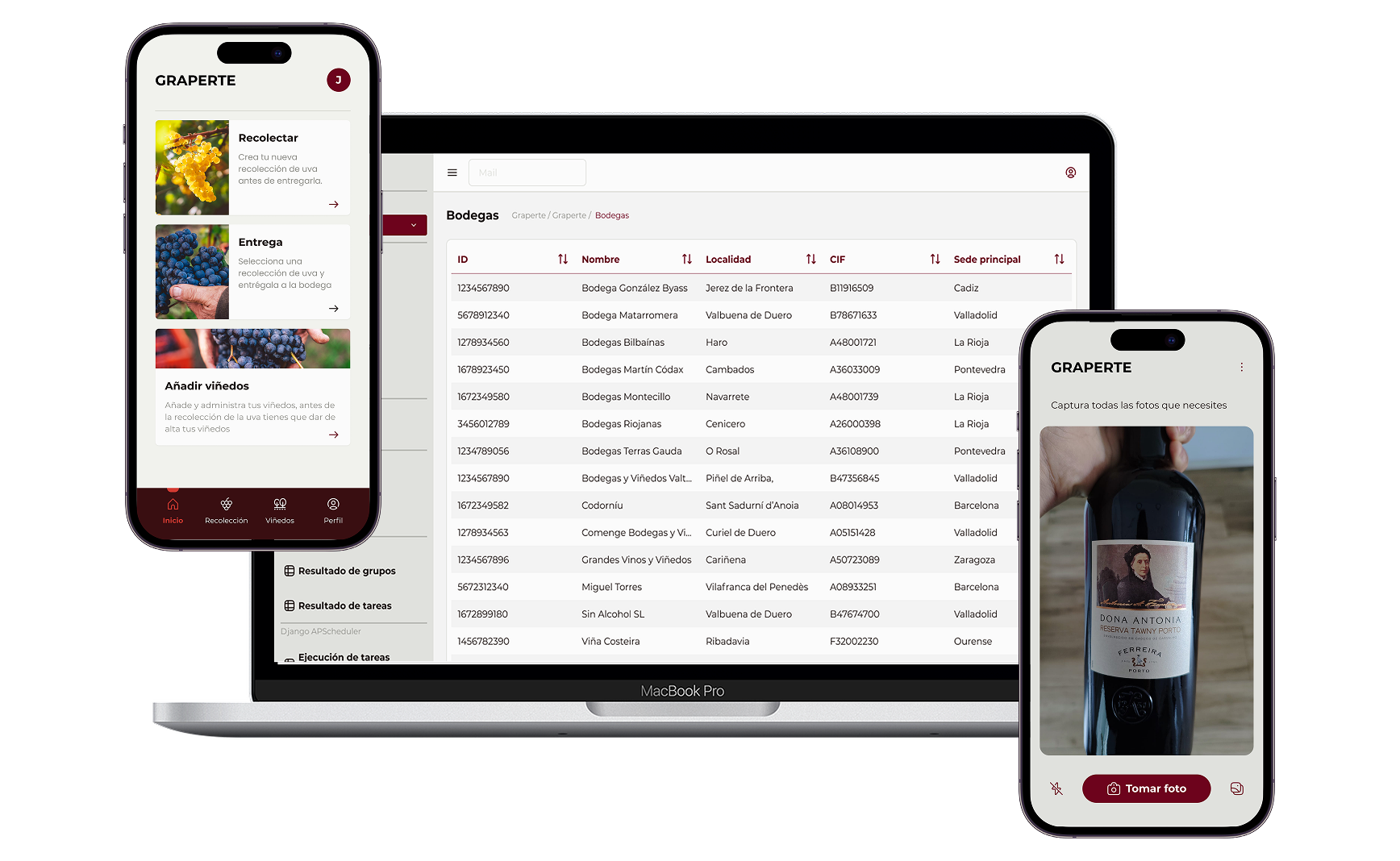
A mobile app that uses computer vision to recognize key information on a wine label from an image. Once the label is identified, consumers can track the history of a specific bottle, including information about the origin of the grapes, the production processes, and other relevant details related to the product’s journey.
App for farmers
A mobile app designed to digitize the grape harvest process from the very beginning. It enables growers to record information and documentation regarding the harvested grapes, their condition, the associated lot, and the delivery made to the winery. In this way, traceability begins at the earliest stages of the value chain, linking field operations with the rest of the production process.
Traceability Service
A web service integrated with the farmers' app and the various digital systems already in place at the wineries. Its function is to process data from diverse sources to generate evidence of wine traceability, both in the form of verifiable credentials and through tokens recorded on the blockchain, thereby reinforcing confidence in the product's origin and production history.
Applied computer vision
The solution uses computer vision to identify key information from the wine label based on a photo taken by the consumer. This feature makes it possible to recognize the specific bottle and link it to its traceability information, turning a simple action—taking a photo—into a gateway to the product’s journey. The goal is to present complex data to the end user in a way that is understandable, quick, and useful.
Verifiable credentials
The raw data generated during the process is structured as verifiable credentials, enabling the creation of digital evidence regarding the product’s origin, operations, and evolution. This approach makes it easier to issue, access, and verify specific data with greater confidence, providing added value and preparing it for scenarios where different entities need to share reliable information.
Tokenisation of events on the blockchain
The solution uses tokens recorded on the blockchain to represent specific milestones or relevant evidence within the wine value chain. This layer enables information about the production process to be linked to traceable records that are tamper-proof and can be accessed at a later date. The aim is not to introduce blockchain as a standalone element, but to use it as a trusted framework to enhance the traceability, transparency and accuracy of the product’s journey.
System integration
One of the key features of the solution is its integration with existing digital systems within the winery and with data captured in the field. The traceability service processes data from diverse sources to consolidate it into a comprehensive view of the product. This helps eliminate parallel processes, reduce duplication, and align traceability with actual operations, ensuring that the technology adapts to the existing workflow.
My role
Delivery coordination, functional definition, and traceability
My role focused on coordinating the implementation, ensuring functional deployment, and defining traceability workflows within an industrial environment involving multiple systems, data sources, and stakeholders. I worked on translating operational and technological requirements into clear workflows, helping to connect the farmers’ app, the consumer-facing interface, and the traceability web service integrated with the winery’s digital systems. The main challenge was to organize a technically complex solution—computer vision, verifiable credentials, tokenization, and blockchain—so that it could fit into real-world processes for grape harvesting, wine production, and tracking.
Results
The project made it possible to develop a more transparent and interconnected traceability solution capable of integrating information from the field, the winery, and diverse sources within a single functional framework. Defining workflows helped organize how product data was recorded, processed, and accessed, facilitating the relationship between the solution’s various components: the farmer app, visual recognition for consumers, verifiable credentials, blockchain tokens, and the traceability web service. This helped transform a complex technological proposal into a more actionable, understandable system aligned with the wine industry’s actual operations.
Learning
This project allowed me to delve deeper into how to implement emerging technologies in industrial settings where traceability depends on physical processes, distributed data, and very specific operational needs. One of the key lessons I learned was the importance of aligning the technological vision with real-world usage: it is not enough to simply incorporate blockchain, AI, or verifiable credentials if these elements do not integrate naturally into existing workflows. The project strengthened my ability to coordinate delivery, prioritize functional requirements, and translate complex technical solutions into clearer experiences and processes for different user profiles.
Proyecto anterior Proyecto siguienteLet's apply traceability to real-world processes
We can discuss traceability, data integration, applied AI, or solutions that need to evolve from a technological concept into a clear, useful experience that’s closely tied to real-world operations.
ContactMacarena Torralba
Product Innovacion · UX Strategy · IA & Emerging Tech
Defining and bringing to market complex digital products at the intersection of experience, technology, and innovation.

Tokenization of aid
::sub::Identidad digital y tokenización para ayudas sociales con foco en impacto humano::/sub::
::desc::Proyecto de innovación social basado en SSI y blockchain para modernizar la gestión de ayudas públicas y reducir burocracia en colectivos vulnerables. Participé principalmente en investigación UX, discovery, diseño centrado en usuarios reales y validación mediante pilotos.::/desc::
::tags::Impacto Social · UX Research · SSI · GovTech::/tags::
Tokenization of aid
Digital Identity and Tokenization for a More Secure, Traceable, and Inclusive Distribution of Social Assistance
A European social and technological innovation project developed within the framework of NGI TrustChain, aimed at exploring how digital identity, verifiable credentials, and digital tokens could improve the distribution of social assistance. The solution adapts components of Identfy to a real-world use case involving vulnerable citizens, local businesses, and organizational administrators, with the goal of facilitating access to assistance in a more secure, traceable, and privacy-respecting manner. My role focuses on user research, UX definition, user stories, validation with pilot users, functional QA, and adapting the base product to a specific solution with high social impact.
SSI · Social Impact · User Research · UX Strategy · Verifiable Credentials · Tokenization
The problem
The challenge was to make the distribution of social assistance more accessible, secure, and traceable for vulnerable citizens, businesses, and organizations.
The project addresses a particularly sensitive issue: many vulnerable individuals face barriers to accessing digital social services, ranging from limited technological literacy to a lack of trust or unclear administrative processes. The challenge is to design a solution that simplifies the management of benefits through digital identity, verifiable credentials, and tokens, while maintaining a focus on privacy, inclusion, and actual use by citizens, businesses, and organizations. Translated with DeepL.com (free version)
Inefficient bureaucratic management
The administration of social assistance can become slow, manual, and lacking in transparency, especially when multiple stakeholders and resources are involved. The challenge was to bring greater traceability, control, and trust to the process without increasing the administrative burden or compromising the privacy of beneficiaries.
Complex coordination among stakeholders
The process involved stakeholders with very different needs: beneficiaries, local businesses, and administrative entities. The challenge was to integrate their actions into a single workflow—receiving aid, accepting tokens, managing users, or reviewing transactions—without making the experience confusing, fragmented, or difficult to use.
Trust in sensitive contexts
When working with social assistance programs and data related to situations of vulnerability, trust was a key factor. The challenge was not only to ensure technical security, but also to make it clear what data is used, how it is protected, and what control each person retains over their digital identity and transactions.
The solution
A digital identity and token solution for managing social assistance in a more secure, traceable, and inclusive way.
App for residents and businesses
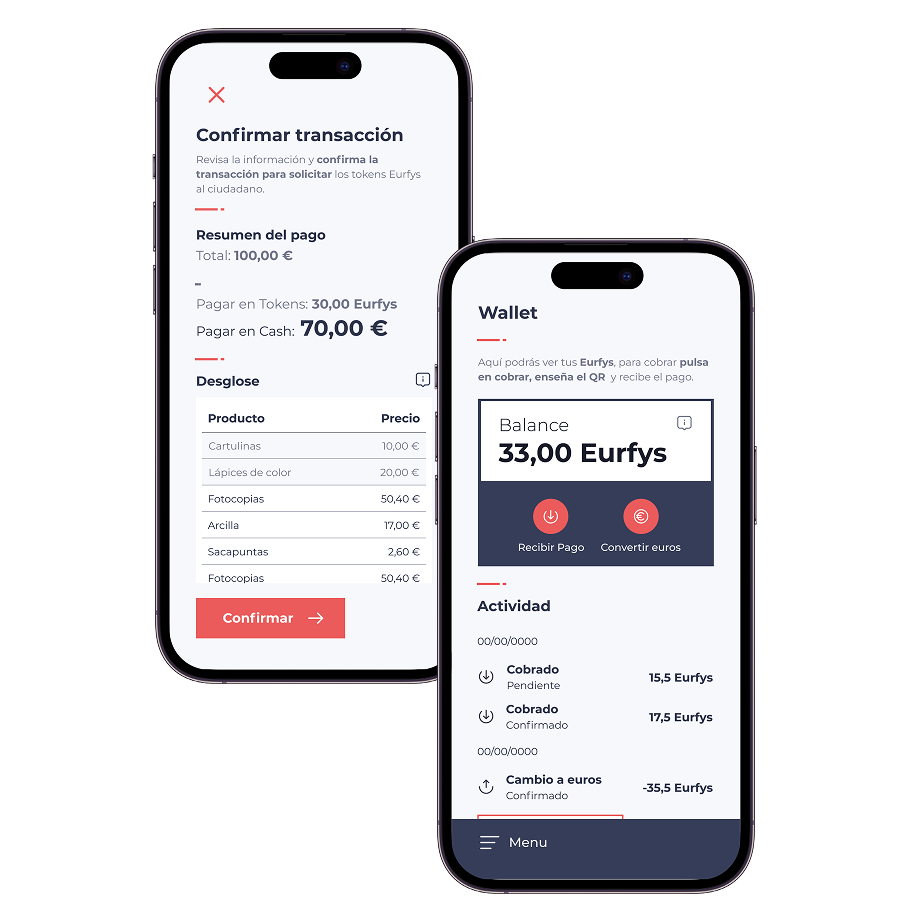
The app allows beneficiaries to receive and use aid in the form of digital tokens, facilitating secure payments at participating merchants without relying on traditional methods that are slower or less traceable. For merchants, the platform enables them to accept tokens, view transactions, and manage requests related to their conversion, linking social assistance to a simpler, more local, and verifiable user experience.
Administration portal for organizations
The administration portal allows organizations to manage users, verify credentials, monitor operations, and track the distribution and use of tokens within the ecosystem. This layer provides greater visibility into the flow of aid, helps reduce manual processes, and enables organizations to operate with greater control, transparency, and traceability, all while ensuring the protection of beneficiaries.
SSI and verifiable credentials
The solution incorporates self-sovereign digital identity and verifiable credentials to streamline identification, authentication, and eligibility verification processes. This approach allows beneficiaries to use verified data within a more secure and privacy-respecting model, while organizations can validate relevant information without relying on manual processes or documentation that is difficult to verify.
Tokens for social assistance
The system uses digital tokens as a mechanism for distributing and utilizing social assistance within a controlled environment. Beneficiaries can receive tokens and use them at participating merchants, while organizations maintain greater visibility into how the funds are used. This layer enables traceability, usage rules, and operational control without making the assistance process more complicated for the end user.
Research and validation with real users
One of the key elements of the project was working with real users from the early stages, including vulnerable citizens, local businesses, and organization administrators. The research helped identify barriers to digital autonomy, understanding, trust, and everyday use, and incorporated this feedback into the development of user stories, workflows, and functional criteria. The goal was for the solution not only to work technically but also to address real-world usage scenarios.
Applied artificial intelligence
The solution explored the use of artificial intelligence to support management, classification, and analysis tasks within the social assistance process. The goal was to enable more efficient operations for organizations by helping them interpret information, identify relevant patterns, and reduce manual workloads in complex administrative scenarios. This layer was designed to add value without replacing human judgment, while maintaining a focus on transparency, control, and trust.
My role
User research, functional UX, and adapting a product to a new vertical
My role focused on user research, UX definition, and the functional implementation of the solution, adapting Identfy components to a specific use case involving the distribution of social assistance through digital identity, verifiable credentials, and tokens. I worked on analyzing the needs of vulnerable citizens, businesses, and organization administrators; defining and updating user stories; designing workflows; conducting a functional review of the solution; and preparing criteria to validate its use in a real-world pilot environment.
Results
The project made it possible to transform a complex technological foundation into a more user-friendly solution tailored to real users, integrating digital identity, tokenization, and social assistance management into a clearer operational experience. Research and validation helped identify barriers related to digital autonomy, understanding, trust, and user friction, and this feedback was incorporated into the development of user stories, functional flows, and product improvements. The project enabled us to validate the solution with real-world users—vulnerable citizens, businesses, and administrators—and move toward a more inclusive, traceable version that is ready for social use cases.
Learning
This project allowed me to delve deeper into one of the major challenges of decentralized digital identity: transforming a technically complex model into an experience that is understandable, secure, and actionable for non-expert users. Beyond issuing credentials or tokenizing benefits, the value lay in designing workflows where citizens could understand what they were receiving, what they could do with it, and the implications of each action. It also reinforced the importance of adapting SSI solutions to real-world adoption contexts, where trust, traceability, and consent must coexist with a simple, guided, and operationally viable experience. Translated with DeepL.com (free version)
Proyecto anterior Proyecto siguienteLet's design technology that makes a real difference
We can discuss products, UX, digital identity, applied AI, or social solutions that need to transform complex technology into clear, inclusive, and user-friendly experiences.
ContactMacarena Torralba
Product Innovacion · UX Strategy · IA & Emerging Tech
Defining and bringing to market complex digital products at the intersection of experience, technology, and innovation.

Social Services Platform
::sub::Transformación digital y redefinición estratégica de una plataforma social multi-entidad::/sub::
::desc::Sprint Zero orientado a redefinir una plataforma utilizada por cientos de entidades sociales para gestión de inserción laboral y acompañamiento. Participé en discovery, workshops, definición funcional, UX estratégica y exploración de casos de uso IA aplicados a procesos sociales complejos.::/desc::
::tags::Discovery · Estrategia · IA · Service Design::/tags::
Social Services Platform
Strategic definition of a multi-entity social platform with applied AI and a product vision
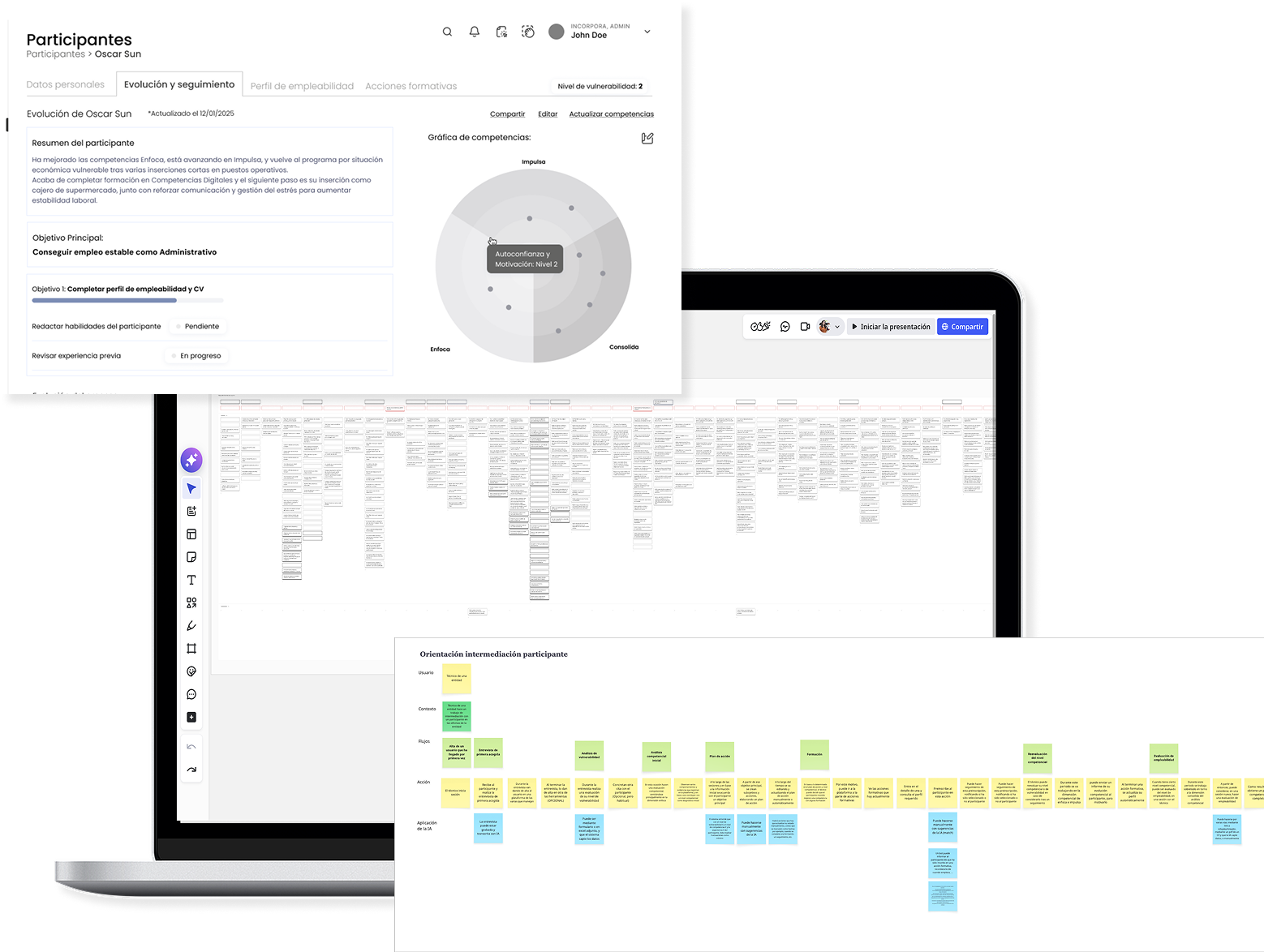
This project involved defining and implementing a digital platform used by multiple social organizations to manage processes related to support, guidance, training, job placement, and follow-up for people in vulnerable situations. The work combined research with real users, functional analysis, strategic UX, and exploration of opportunities for applied AI to reduce administrative burden, improve traceability, enhance data quality, and transform a complex ecosystem into a clear, scalable product proposal ready for incremental development.
UX Discovery · Applied AI · Digital Product · Functional Definition · User Research
The problem
The challenge of organizing a complex social ecosystem—with multiple profiles and processes—into an efficient, auditable, and people-centered platform.
The project is based on a platform used to manage support, guidance, training, job placement, and follow-up processes for people in vulnerable situations. The challenge was not merely to redesign a tool, but to understand how very different user profiles work, identify real friction points in their day-to-day activities, and transform fragmented processes into a clearer, more user-friendly solution ready to incorporate automation, analytics, and artificial intelligence in a way that makes operational sense. The deliverables identified the high administrative burden, the lack of traceability in follow-ups, the need to automate repetitive tasks, and the need to improve data quality as critical issues.
Administrative burden in sensitive processes
Teams that support vulnerable individuals manage complex information, follow-ups, documentation, care plans, and coordination with various stakeholders. The challenge was to reduce manual and repetitive tasks without compromising the quality of care, ensuring that the platform helped streamline the work rather than becoming an additional burden.
Lack of traceability and an integrated approach
The processes of guidance, training, placement, and follow-up generated relevant information, but it was not always easy to access, correlate, or analyze. The challenge was to build a more integrated view of each individual’s journey, improving the traceability of actions, decisions, and outcomes to facilitate more consistent, data-driven management.
Diversity of users, roles, and needs
The solution had to cater to a wide range of user profiles: technicians at social organizations, coordinators, technical offices, institutional staff, and future users with greater autonomy within the system. Each role had different objectives, digital skills, and operational needs, so the challenge was to design a flexible experience without fragmenting the product or making it harder to maintain.
The solution
Multi-entity platform design
The platform was designed to centralize the management of participants, organizations, companies, job postings, training programs, career paths, and follow-ups within a single functional ecosystem. The goal was to reduce the fragmentation of tools and provide a more consistent experience for users with different responsibilities, allowing each user to access the tasks, data, and processes relevant to their role.
UX & Functional definition
The solution was developed using user journeys, low-fidelity wireframes, user story maps, and the definition of key features. The focus was on transforming the needs identified in the research into clear, prioritized, and actionable workflows, thereby facilitating a more streamlined experience for recurring tasks such as entering information, checking itineraries, managing follow-ups, or coordinating actions among different user roles.
AI applied to support processes
The proposal included artificial intelligence solutions designed to reduce repetitive tasks, improve data quality, and support decision-making in career guidance and job placement processes. The use cases explored included conversational assistants, content generation, advanced analytics, recommendations, and support for matching profiles, needs, and opportunities—all intended to complement professional work.
Complex ecosystem
The project began with an environment characterized by a wide variety of roles, organizations, processes, and levels of coordination, where each user had different needs, responsibilities, and ways of working. The challenge was to understand how the entire ecosystem—from direct care to coordination and oversight—functioned in order to identify dependencies, friction points, and opportunities for improvement without oversimplifying a highly complex operational reality.
Operational friction
One of the main focuses was identifying the tasks that created the greatest workload on a day-to-day basis: manual record-keeping, duplication of effort, difficulty accessing information, inefficient processes, and a lack of traceability in follow-ups or key decisions. The analysis helped us understand which issues were truly affecting team efficiency and how a new solution could reduce administrative burdens without compromising the quality of support.
AI applied with discernment
The exploration of artificial intelligence was approached from a practical perspective, linking each potential use case to real-world system needs rather than to a generic technological implementation. Opportunities related to automation, conversational assistants, recommendation systems, data analysis, content generation, and decision support were analyzed, always viewing AI as a tool to support professional judgment rather than as a replacement for human work.
Product Management
The project transformed a broad and loosely structured context into a clearer, prioritized, and actionable product strategy. Based on research, functional analysis, and the identification of opportunities, a foundation was established to guide the platform’s evolution in phases, aligning user needs, business objectives, technical feasibility, and innovation potential into a roadmap designed for incremental development.
My role
Strategic research, functional implementation, and AI applied to social products
My role focused on organizing a very broad functional ecosystem based on research with real users, process analysis, and strategic UX definition. I worked on preparing and analyzing workshops, interviews, and surveys; identifying operational friction points; mapping user journeys; and translating user needs into actionable requirements. I also participated in the implementation of applied AI opportunities, helping to assess which use cases made sense from a functional, operational, and ethical standpoint within a complex social platform.
Results
The project made it possible to transform a broad, fragmented context with multiple user profiles into a clearer, prioritized product proposal ready for incremental development. The research helped identify critical issues such as administrative burden, duplication of effort, lack of traceability, difficulty accessing information, and automation needs, while the functional analysis enabled us to translate those findings into workflows, user stories, low-fidelity wireframes, and an evolution roadmap. Furthermore, the exploration of AI helped identify opportunities for real value linked to automation, conversational assistance, recommendations, advanced analytics, and data quality improvement, avoiding the approach of treating technology as a generic layer disconnected from daily operations.
Learning
This project allowed me to delve deeper into how to approach the early stages of product definition in highly complex social environments, where institutional needs, operational processes, diverse professional profiles, and people in vulnerable situations all coexist. One of the key lessons was the importance of designing based on the reality of day-to-day work, not just the client’s strategic objectives: understanding which tasks are time-consuming, what information is lost, where duplication occurs, and which decisions require more support. It also reinforced my approach to implementing applied AI responsibly, linking each technological opportunity to a specific problem, a validated need, and a tangible improvement for users and the organization.
Proyecto anterior Proyecto siguienteBring the idea down to earth with a clear roadmap
We can discuss products, UX, user research, applied AI, or digital solutions that organize complex processes and transform them into clear, useful experiences that are ready to evolve.
ContactMacarena Torralba
Product Innovacion · UX Strategy · IA & Emerging Tech
Defining and bringing to market complex digital products at the intersection of experience, technology, and innovation.
Let's grab a cup of coffee
The best ideas often start with casual conversations. We can talk about products, UX, AI, innovation, or that complex challenge that’s still taking shape.