SSI Ecosystem
A digital identity and verifiable credentials management solution adaptable to multiple business sectors
A verifiable digital trust enterprise platform designed to issue, manage, and verify electronic credentials and attestations among organizations, citizens, customers, and systems. The solution prepares companies and institutions for the exchange of verifiable data within the framework of eIDAS2, making it a solution aligned with EUDIW. It combines digital wallets, cryptographic verification, and integration with existing systems. My involvement has focused on the product’s functional and UX evolution, helping to transform a complex technical ecosystem into clearer, scalable workflows tailored to enterprise and institutional scenarios.
Self-Sovereign Identity · Web3 · Verifiable Credentials · Strategic UX · Digital Product
The problem
The challenge of transforming a complex ecosystem of digital identity, verifiable credentials, and European regulations into a clear and straightforward experience for businesses, institutions, and users.
The product addresses a context in which organizations, citizens, and systems need to exchange verifiable data with greater security and interoperability. The challenge lies in translating technical and regulatory concepts—such as eIDAS2, EUDIW, OIDC, and Web3—into product workflows that are understandable, scalable, and ready for real-world enterprise use cases.
A technical field that is difficult to master
Decentralized digital identity combines standards, wallets, verifiable credentials, trust models, and cryptographic verification. The challenge was to transform that technical complexity into a clear product experience, where every user could understand what they are issuing, verifying, or sharing.
Interoperability among stakeholders and systems
The solution needed to connect organizations, citizens, wallets, issuing entities, verifiers, and external systems within a single trusted ecosystem. This required organizing data flows, roles, and permissions to facilitate the exchange of verifiable data without disrupting the user experience or increasing operational friction.
Adaptation to enterprise and regulated environments
The product needed to evolve to address more demanding use cases, meeting the specific needs of businesses and institutions: control, traceability, security, scalability, and regulatory compliance. The challenge was to make the platform robust enough for regulated environments, yet user-friendly for users who were not necessarily technical experts.
The solution
Personal wallet
A mobile app designed for citizens who need to securely receive, store, and submit electronic documents. Its goal is to give individuals control over their data, allowing them to decide who can access their personal information and when to share it.
Business wallet
A web application designed for ermite. It enables the management of a legal entity’s digital identity, as well as the credentials associated with it. It facilitates scenarios in which an entity needs to identify itself, verify attributes, receive or submit verifiable information, and participate in trust ecosystems with other organizations, customers, or government agencies.
Wallet connector
A user-friendly web service that acts as an interface layer between client systems, wallets, and the SSI layer. It enables the solution to be integrated into existing business processes, making it easier for companies and institutions to adopt digital identity in a more scalable, interoperable, and actionable way.
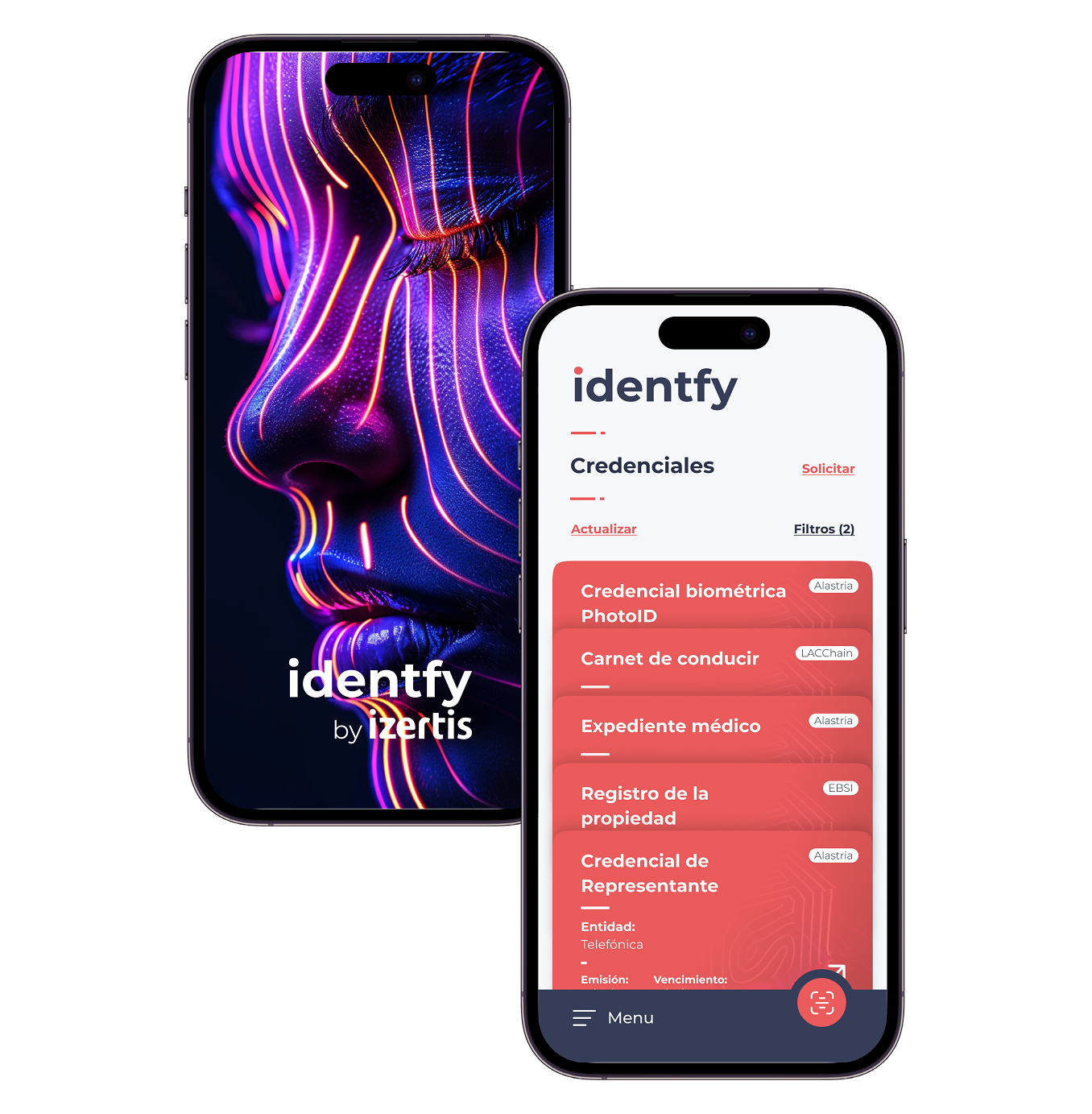
Management of credentials and SSI
The solution enables the issuance, management, presentation and verification of verifiable credentials linked to individuals, organisations or processes. Through modules and wallets, the product facilitates the management of accredited digital attributes, enabling citizens, businesses and issuing entities to operate using reliable information. The aim is to organise digital identity into clear, secure and reusable workflows, reducing reliance on static documents or manual validation.
Interoperability You Can Trust
The solution is designed for scenarios where different standards, wallets, stakeholders and trust models coexist. It aims to facilitate interoperability between ecosystems, enabling credentials to be issued, shared and verified in contexts aligned with eIDAS2 and the EUDI Wallet. The challenge is to translate this regulatory and technical complexity into product workflows that are understandable, scalable and ready for use across multiple stakeholders.
Secure and traceable verification
The platform incorporates verification mechanisms that allow for the authentication, integrity, and validity of submitted credentials to be verified. This enables organizations to rely on the information received without having to depend solely on manual processes, isolated documents, or additional intermediaries. The goal is to strengthen trust among parties, improve the traceability of transactions, and reduce risks associated with fraud, manipulation, or a lack of verifiable evidence.
UX for Non-Technical Users
One of the main challenges is to translate a highly technical field into an experience that is understandable to business, management, and operations professionals. The solution must make concepts such as verifiable credentials, wallets, issuers, verifiers, and trust frameworks more accessible, without compromising on functional rigor or security. The focus is on designing guided workflows, clear screens, and intuitive actions that enable the adoption of verifiable digital identity in real-world enterprise contexts.
My role
Functional definition, product development, and strategic UX
My role focused on the functional and UX evolution of the ecosystem across different stages of the product’s maturity. I worked on defining workflows, user journeys, key screens, and experience improvements to facilitate complex use cases related to the issuance, management, presentation, and verification of verifiable credentials. The main challenge was to translate a technical ecosystem—SSI, digital wallets, organizational identity, interoperability, and trust frameworks—into a clearer, more structured, and understandable experience for enterprise, institutional, and non-technical users.
Results
The work improved the clarity of the product, streamlined complex workflows and made critical processes within the digital identity ecosystem easier to understand. The functional and UX enhancements helped adapt the solution to more complex scenarios, incorporating new requirements relating to interoperability, credential management, Business Wallet, Personal Wallet and integration with external systems. This helped to consolidate a more consistent and scalable experience, better able to address enterprise, institutional and regulated use cases, where trust, traceability and ease of adoption are key to ensuring the solution can be applied in real-world contexts.
Learning
The project allowed me to explore in depth how to transform emerging technologies such as SSI into digital products that are usable, actionable and understandable for different user profiles. One of the key lessons I learnt was the importance of balancing technical rigour, regulatory compliance and user experience clarity, particularly when the end user is not necessarily expected to understand concepts such as verifiable credentials, digital wallets or interoperability between trust frameworks. The project strengthened my ability to bridge business, UX and technology in products where trust, security, scalability and adoption are just as important as the platform’s core functionality.
Let’s turn digital trust into experience
We can discuss products, UX, digital identity, SSI, or enterprise solutions that need to transition from a complex technical ecosystem to a clear, scalable approach focused on real-world adoption.