Aggregated data oracle
Smart contracts and access rules for sharing sector-wide metrics without exposing individual data.
A private blockchain solution enabling different companies within the same sector to record regular activity data and access aggregated market metrics without disclosing individual information. The system provided an early view of sector trends that would normally be available only months later, by applying automatic rules governing participation, privacy and data access.
Blockchain · Smart contracts · Oracle · Aggregated data · Privacy · UI
The problem
The challenge of enabling competing companies to share industry data more efficiently, thereby obtaining aggregated metrics useful for decision-making without compromising the confidentiality of individual data.
The participating companies were already regularly reporting activity data to external bodies and subsequently receiving aggregated reports on market performance. However, these reports arrived several months late, making them of little use for analysing recent trends, anticipating market movements or making business decisions based on up-to-date information.
The challenge lay in creating a mechanism that would enable this aggregated view of the sector to be presented without any company being able to access another’s individual data. For the system to be acceptable, it had to ensure that only those who had contributed data could view the results, that metrics were published only when there was sufficient participation, and that no human operator had to manually review the raw data.
Delay in aggregate data
The official data provided a useful insight into the sector, but it was released too late to serve as an operational tool for monitoring trade or analysing recent market trends.
Confidentiality between competitors
The system was designed to prevent one company from deducing data about another, even when accessing aggregated results. It was therefore necessary to establish minimum participation rules and thresholds to protect the privacy of the group as a whole.
Automation of access rules
Access to aggregated data could not rely on manual review. It was necessary to automate the conditions for publication using verifiable rules that determined when and who could access the information.
The solution
Platform for sharing sector-specific data
A private solution was developed whereby each company could periodically record its activity data via an administration interface. The information was linked to a specific period and could only be used to generate aggregated metrics when the conditions defined by the system were met.
Conditional query of aggregated metrics
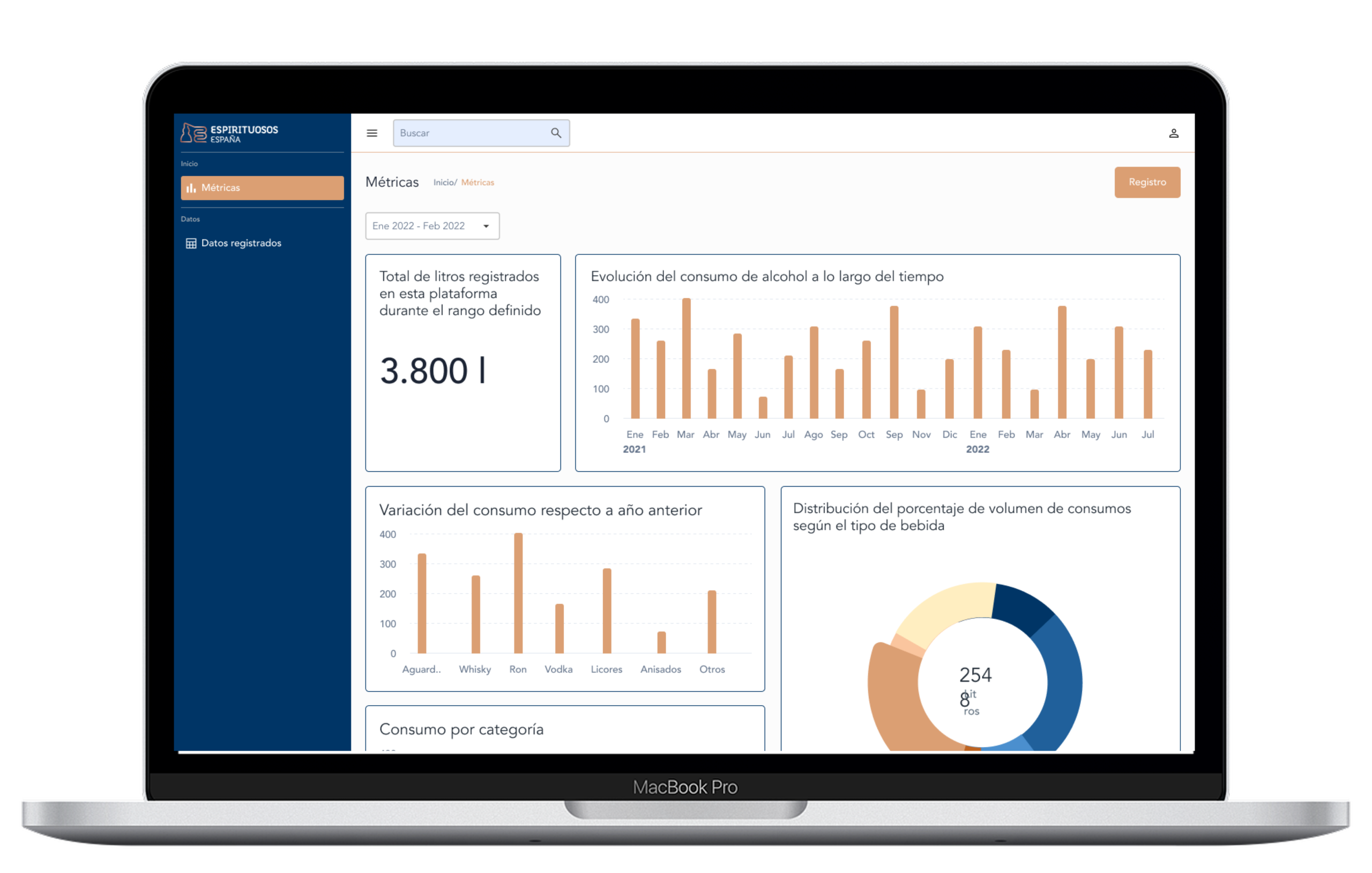
The product enabled users to view the most up-to-date sector-specific information without revealing individual data. To this end, access to the results was subject to automatic rules: data must have been submitted for that period, the month must have been finalised, and there must have been sufficient participation to prevent the identification of any specific company.
Smart contract for participation
The solution used a smart contract to record the data contributions made by each company for each period. This mechanism made it possible to verify who had participated without directly exposing individual information within the query flow.
Rule-based oracle
The oracle checked whether the necessary conditions for granting access to aggregated metrics had been met: the period had been closed, the company was a participant, and there were sufficient contributions to protect the confidentiality of the dataset.
Privacy through aggregation
The model avoided displaying results when there was insufficient participation or when the data could be used to draw conclusions about individual records. The query was only enabled when there was a critical mass of contributing companies.
Customised administration interface
The solution was implemented using a Django Admin-based interface, customised to facilitate regular data entry, the viewing of aggregated results, and use by non-technical users.
My role
UI design for the admin interface
My role focused on designing the user interface for the solution, building on a Django Admin-style framework and adapting it visually and functionally to the specific use case. The aim was to transform a technical administrative tool into a more intuitive experience, enabling companies to record regular data and view aggregated metrics whenever the system rules permitted.
I worked on the layout of screens, forms, navigation and data display, ensuring that the workflow was easy to understand for non-technical users whilst maintaining the principles of privacy, participation and conditional access defined by the blockchain solution.
Results
The project enabled the development of a limited-scope blockchain solution to validate a model for the exchange of aggregated data between competing companies. Through the smart contract, the oracle and the administration interface, a way was explored to record contributions, automate access rules and consult sectoral metrics without revealing individual information. Although it was a small project and preceded the development of more mature traceability solutions, it served as a first practical approach to the use of blockchain for trust, automation and governance of shared data.
Learning
This project gave me a better understanding of the value of blockchain beyond mere traceability: as a mechanism for automating trust mechanisms between parties who do not necessarily wish to share raw data. It also taught me how to design simple interfaces for technical systems, where the key was not to highlight complexity, but to make it clear when aggregated information could be recorded, queried or accessed.
Let’s talk about data sharing and digital trust
I design digital experiences that help transform technical systems—such as blockchain, access rules and shared data models—into clear, understandable and useful tools for businesses.